A Female Prize Fight in Chicago in … 1856!
As many of your know, I am currently writing a book on the history of women’s boxing.
I came across the following about a women’s “prize fight” in 1856!
Enjoy!
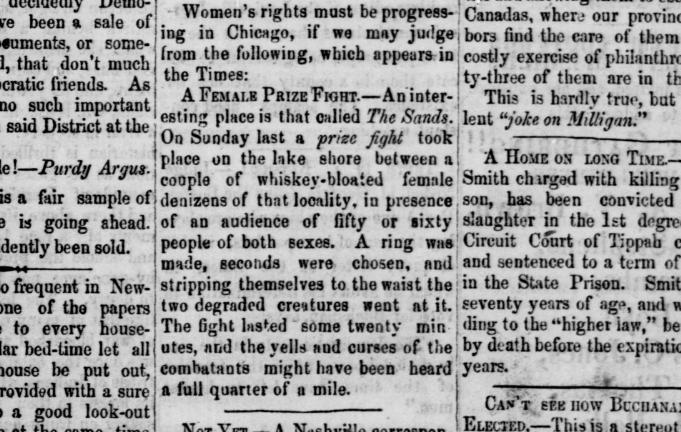
A Female Prize Fight in Chicago in … 1856!
As many of your know, I am currently writing a book on the history of women’s boxing.
I came across the following about a women’s “prize fight” in 1856!
Enjoy!
UPDATE, 2/21/2013!!!

Keisher McLeod Wells defeated Jacqui Park in their 6-round super flyweight bout by unanimous decision. The judges scored the fight 59-55, 58-56 and 58-56. Fire is now 6-2! Jacqui Park is 1-1.
Exclusive Interview with Keisher “Fire” McLeod Wells ahead of her 2/21/13 fight!

Gleason’s own four-time New York Golden Gloves champion and professional boxer Keisher “Fire” McLeod Wells (5-2, 1-KO) will be boxing again on DiBella Entertainment’s Broadway Boxing card this coming Thursday, February 21st at the world-renowned Roseland Ballroom in the heart of New York City. Fire will be facing a former four-time Canadian National Amateur champion, 36-year-old, Jaqueline Park (1-0) in a six-round super flyweight showdown.
This will be Fire’s first fight since her controversal split-decision against Patricia Alcivar. She forcefully disputes the knockdown call at the end of the 6th round–and in viewing the tape, you’d have to say it did look like a slip.
As for fighter Jacqueline Park, her four-round debut professional fight resulted in a unanimous decision over Amanda Beaudin back in September.
Tickets are still available for the Ring of Fire event ranging from $45.00 – $125.00. Contract Gleason’s Gym (212) 787-2872 to purchase tickets.
Girlboxing had a chance to pose some Q & A to Fire ahead of upcoming bout, this is what she had to say.
 1. You’ve got a fight coming up on February 21, 2013 on a DiBella Entertainment, Broadway Boxing Card at Roseland Ballroom in New York City. What can you tell Girlboxing readers about your 6-round fight against Canadian national amateur champion Jacqueline Park?
 I don’t know much about her but I know she has a boxer style like my style. I’ve heard good things about her amateur career and that’s what I like to hear. I want to fight good fighters. That’s the only way I get better. It will be interesting to fight someone with a similar style to mine as opposed to the normal and obvious, my opponents usually comes straight forward non stop. I’m used to fighting brawlers and I’ve learned how to deal with them, so I’m excited to box a boxer. However, I won’t be surprised if she changes her style to brawler though because I’m taller. I’m prepared to take on both styles.
My sister was a very gentle and kindhearted individual. She was a great single mother of two young kids. She would come to my fights with support. She loved bragging about me to her friends about being a younger sister to a professional boxer. I am going to miss seeing her face in the audience cheering me on. This fight is being dedicated in her memory on my behalf. This will be my first fight since her death. I took some time off after her passing to cope with the lost of her with my family. This was the first loss my family has experienced, so it hit us really hard. What was more tragic is the way we lost her. Gun violence is so out of control. Using this fight in her memory with my popularity to the sport in NY, I’m hoping to bring more awareness in ending gun violence.
 3. It’s been 11 months since your last outing. You fought against Patricia “Boom Boom” Alcivar, in a tough battle that saw you knock her down in the 3rd and take a shot that was ruled a knock down in the 6th. Still you were triumphant with the judges giving you a split decision win, 57-55 x 2 and 55-57. What have you learned from that fight and what sort of adjustments in your game plan are you making as you head into head into the ring on the 21st?
First, I would like to say I never took a shot from her that landed me on the canvas. I slipped after dodging an unsuccessful punch that never landed by her. You can clearly see that after they replayed it in slow motion. Even the commentaries said it wasn’t a knock down. I was so confused when they started counting. That wasn’t the first time slipping in the ring for me in my boxing career. I can get a little wobbly and clumsy sometimes, but I never been counted out for that in the past. I was upset. I felt I won unanimously regardless of the 8 count. I fought tougher fights giving me unanimous decisions. So I couldn’t understand the split decision. The only adjustment I have for any fight after the one with Patricia Alcivar, is to try not to slip again. I’ve been working a lot on leg strength this time around. So hopefully I’m done with the wobbly legs.
 5. You’re a Golden Gloves Champion four times over as an amateur and bring a 5-2 record coming into your next professional fight. What can you tell up-and-coming fighters about the difference between fighting in the amateurs and fighting as a professional boxer?
The obvious difference is that professional fighters get paid, the headgear comes off and the gloves are smaller. The rounds become longer as well. Fights are more far in between too. However, I feel the reward is greater at the end because you are training for a war that is more brutal than amateur boxing. The training is more intense and so is the fight itself. There is a lot harder punches to be felt and give without the protection amateur boxing gives.
6. Your other love besides boxing is fashion. You’ve also started a jewelry line with wonderful creations that are beginning to adorn half the women in Brooklyn–or so it seems. How are you managing to fit your two love together: boxing and jewelry making?
Being a jewelry designer is what soothes my mind in between fights and training. Each piece I make is from my mind and heart. They’re unique one of kind pieces. It’s wearable art. I get in a zone when I paint (my jewelry). So when my mind and body is tired from training, I relax it by making jewelry. Also, I get a lot of down time when I’m working at Gleason’s on Sundays. So I create here sometimes while I’m here. Some are my items are boxing related, so I find inspiration from Gleason’s.
 7. Where do you see yourself going from here, Fire?
I would love to be some kind of TV personality or something in that nature relating to boxing after I decide I don’t want to compete any longer. I never look ahead in the future. I live my life pretty much from week to week. If I had children then I probably would have more sight of my future. Probably a bit irresponsible, but that is the way I’ve always lived my life. I am aiming for a World Title in the near future though, however it comes.
A Boxing ‘Ohana – an update …

In Hawaii, an ‘Ohana is a family. A family that may be related through blood or the kind of family the evolves around a passion or a shared set of experiences. Regardless, an ‘Ohana connotes a sacred trust of people who have each other’s back.
When it comes to The Kona Boxing Club, the idea lives in the ‘Ohana that owner and trainer Sonny Westbrook has created around boxing.
Word of the club and of Sonny’s work in the community inspired Sasha Parulis to produce a documentary she has titled, A Boxing ‘Ohana, her way of acknowledging the impact that The Kona Boxing Club has had on the lives of the young men and women who have passed through its doors–lives that have overcome shattered families, drugs, and run-ins with the law.

Now, after four years of developing her short documentary, Parulis and her crew, wrapped production earlier this year in Kailua-Kona Hawaii, on The Big Island. Sasha along with NY-based Director Cynthia Younker and Hawaii-based Director of Photography, Sam Kapoi shot the film on the island for 5 days.
The documentary focuses on how Sonny Westbrook, boxing coach of The Kona Boxing Club has helped and changed many of his boxer’s lives and others in the community. He is a man who is paying it forward in awe-inspiring ways, and the crew captured this on film through anecdotes from Sonny and perspectives of the pivotal people in his life. Sasha is currently working on prepping the next stage of the filmmaking process with editing scheduled for 2013. She is also working on marketing efforts through the film’s Twitter and Facebook pages.
For more information check out A Boxing ‘Ohana’s website here.
Newbie sparring …

For new boxers, the lure of sparring offers the first opportunity to put the skills they’ve been learning to the test.
That means the chance to throw the old one-two, and otherwise work on their offensive combinations, as well as using and importantly, perfecting their defensive skills.
Before sparring begins boxers need to have frank and honest conversations with their trainers as to what to expect and what the progression of their sparring training will be. Questions and issues to consider include the following:
1. Do you really want to spar? This may seem obvious, but some students feel they HAVE TO, before they are really ready to. Make certain that you are clear on what you want to do.
 2. Are you aware of the risks? This can mean anything from a black eye, a split-lip, a broken nose, or even a concussion or other brain injury if you are hit too hard on the head or land hard on the canvas.
3. Does your trainer have your back, meaning, do you honestly trust that your trainer is going to help keep you safe from harm and have the will to stop the sparring session if he or she thinks it is getting too rough?
4. Will your trainer listen to you if after a round or two you say, “I’ve had enough”? There is no glory in getting hurt or in working past one’s own endurance. If you can’t go on, then don’t. You risk injury, dehydration or worse if you push yourself too far.
 5. Do you have a good mouth guard? This is a REALLY essential piece of equipment. And frankly, you should NEVER step in the ring to spar—even to learn a few pointers with your trainer—without one.
If you think you will be sparring on a regular basis and can afford it, you might well want to go to your dentist to have one custom made. Alternatively, you can purchase decent ones from sporting goods, boxing & MMA stores online. Your local gym may also keep some on hand for sale
 6. Do you own a helmet or does your trainer have a helmet to lend you when you are in the ring? A good, safe, well-fitting helmet is a MANDATORY requirement if you intend to engage in sparring. While this might not be legally required—you should not consider sparring or even playing in the ring without one. It is THAT SERIOUS.
The helmets approved for sanctioned USA Boxing amateur fights are likely your best bet. They are padded and provide good protection for you head and jaw line and many will also do a good job of protecting your nose. All of the major boxing catalogs carry them including Ringside, Title and Everlast.
Make no mistake. These helmets do NOT protect you completely and you could still suffer from a concussion, a hematoma (bleeding on the brain), or other form of brain injury even when you wear a helmet.
What they do offer you is some protection from blows and falls, but do not replace the kind of good defensive training that will see you move your head out of harms way.
7. Do you need or want to use other protective gear? Depending upon your sparring partner, and the likely intensity of your time in the ring, you may want to wear gear that protects your lower abdomen and your genitals. There are different designs for men and women and you should make sure that you are using a design that will give you the best protection. This type of gear protects you from feeling blows to your abdomen, but again, will not protect you completely.
 8. Do you have a decent pair of boxing gloves to spar in? Generally, sparring is done with 12 oz. or 10 oz. gloves depending upon your weight class. Here too, you might well want to use USA Boxing approved amateur gloves. They are well padded for your protection—as well as for the protection of your sparring partner. Likely your trainer will have a decent pair for you to use if you do not own your own.
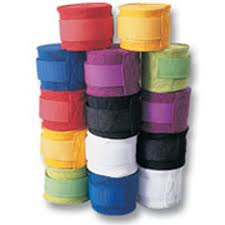 9. Are your hands wrapped properly? This is another biggy! I’m not saying that your training has to give you the full fight treatment, but at the very least you need to make sure that you are using proper clean hand wraps that will give your hands good protection.
10. A word about your sparring partner. As a Girlboxing reader put it, your sparring partner is a member of your team. While you may not know your sparring partner well, your trainer should. That means knowing the relative boxing skills of your partner, his or her strengths and weaknesses, and importantly his or her temperament. What you do NOT want to face is a beat-down. Your first sessions are to familiarize you with the ring and getting a feel for throwing your punch combinations at a live, moving human being, rather than at your trainer’s mitts or the heavy bag.
 A responsible trainer will make sure that you are appropriately matched with a person that is going to give you the flavor of the real thing as you find your comfort zone. That means you should expect to get hit, but not as if you were competing in the Golden Gloves. Again, what you are aiming for is the opportunity to exchange punches so that you can learn both offensive and defensive moves. What this means is that you are going to take some punches, but not hard, more like a tap to remind you to slip or otherwise defend yourself and prepare for your counter moves–not see stars.
When it comes to sparring, some trainers will take this role for themselves choosing to spar with students over several weeks or months to help perfect their student’s offensive and defensive ring skills before they let them spar with other boxers at the gym. Check with your trainer to see if this is a preference both of you share. In my opinion, unless you happen to be a phenom in the ring this is likely the safest method, especially for boxing students who only get to the gym once or twice a week.
11. Do not go it alone! If you trainer isn’t around, but your sparring partner is—do NOT spar! It’s as simple as that. You are working out with a trainer or coach for a reason: to learn the skills of the sport AND to stay safe. Sparring without your trainer in your corner is asking for trouble. Remember, your job is to protect yourself at all times and an inexperienced boxer sparring without a trainer in his or her corner is plain and simple NOT SAFE.
When you enter the ring to spar whether it’s for the first time or the 100th time, it is the real thing.
It is also a fact that many novice boxers are itching to spar from the moment they put on the gloves their very first day in the gym—sometimes to the point of throwing caution out the door.
After spending weeks, if not months, shadow boxing in front of the mirror and throwing jab, jab, right, slip, straight right, left hook combinations at your trainer’s pads the prospect of actually sparring can be very exciting indeed.
Sparring, though, is also a big responsibility for your sparring partner and for you—after all, you could get lucky and throw a left hook that connects beyond your wildest imagination. You also owe it to yourself to be mindful of the boxer’s credo to protect yourself at all times to which I will add an extra level of caution to say, when in doubt, sit it out.
And one more thing–if you DO get hit hard and your head hurts, you have difficulty seeing, you have a headache or lose consciousness, SEEK MEDICAL ATTENTION. It is much, much better to be safe than sorry!
What’s with all the shooting?
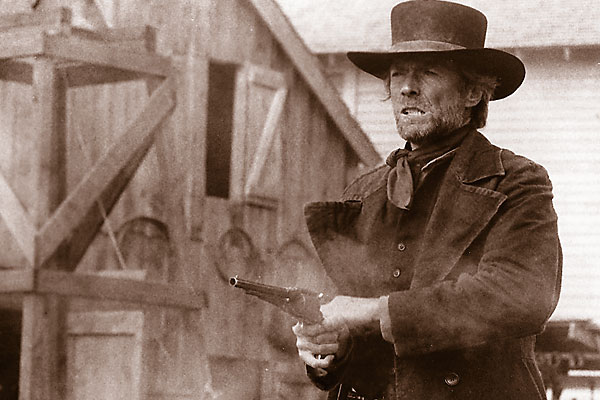
My first awareness of violence was of the family kind. I have no memory of witnessing the violence, rather my memories are of mind-numbing fear that started in my stomach before it froze my bowels as if I’d been stabbed through and through with huge icebergs of pain. It took me until my adulthood to comprehend that I’d witnessed that kind of violence–and to come to terms with what it meant.
That searing experience changes a person one way or another and goodness knows how many children walk around with PTSD without the fanfare that accompanies soldiers coming home from war or the counseling that’s available to first responders after they experience something particularly horrific.
Gun violence adds yet another patina of pain, suffering and misery to the litany of personal violence that is a seeming epidemic that keeps rolling on.
My own relationship to violence was odd.
On the one hand, my parents were radical pacifists for a time and organized “Ban the Bomb” rallies in the late 1950s and early 1960s while violence at home remained in the hidden recesses of our family’s psyche — with no sense of the remarkable contradiction between the public and private spheres of our lives.

My own education about violence was related to the atom bomb. As a six-year-old, I probably knew more about the effects of nuclear radiation on human beings than most adults do now. I also knew about the shadow people — shadows left behind like one-dimensional ghosts of the people who had been killed mid-stride when the bomb hit Hiroshima. The thought of nuclear war haunted me and if I heard a lone plane flying over head at night I would wonder if that was the “one” that would finally bomb New York.
 My pacifism aside — I was still attracted to guns.
After all, they were everywhere.
They were America.
They were the good guys: cowboys, soldiers fighting Nazi’s (even at six, and pacifism aside, I figured that one out), and crime fighters.
They were the West: America as rugged individualists.
Heck even Annie Oakley was a sharp shooter. What could be wrong with that?
Also when I was six, and having my tonsils out, I was offered the choice between two presents: a doctor’s kit or a gun. I have a keen memory of agonizing over the choice. I really wanted the gun, but opted for the doctor’s kit figuring it was easier to take the path of least resistance rather than having to “explain” the other choice.
Fast forward to what feels like a million years between 1960 to 2013 in terms of the cultural changes in the United States, and one can find an important constant that remains in place: our fascination with guns. The ubiquitous gun, however, has taken on other meanings. I would argue that it has become a pawn in our continuing cultural wars not only along the fracture lines of our blue state/red state dichotomy, but along our class wars: with images of the slick urban dwelling post-modernist versus the community loving, church going denizen of “heartland” small towns, not to mention the constant of the racial divides that continue to eat away at our souls.
 Is it any wonder that a youth without prospects for education or meaningful employment would find in a gun an opportunity for empowerment in an otherwise nihilist pit of existential dread otherwise known as a sense that his or her life is without purpose and that the only likely opportunity is prison followed by an early death?
A long sentence I know, but that’s likely what that sort of powerlessness feels like. A long sentence with nowhere to go.
Such powerlessness, however, is not only in the purview of a gang-banger from The Bronx or a meth-head from rural Arkansas.
Along the cultural divide there is the powerlessness against that changes that have brought many of us enormous social progress. That social change can be thought of as a tone poem to President Johnson’s Immigration Act of 1965 (his other Civil Rights act) as it allowed peoples from all over the world without regard to color, religion or nationality, to immigrate to America based on the skills they would bring with them. This has led to an enrichment of the cultures and religions that make up America and has literally changed the social reality that defines who an American is. To those who feel threatened by this new reality, the horizon of the future is often a dystopic vision fraught with images of marauding bands of killers, akin, no doubt, to the thundering hoards from the East who “threatened” Europe in bygone eras. For the preppers and others who follow similar lines of thinking, the answer has been to circle the wagons of old with lots of weapons at the ready just in case the dystopic vision actually happens. In some cases this amassing of weapons has had tragic outcomes as in a recent case where a man mistook a couple in a car who’d rode into the wrong driveway for a pair about to perpetrate a home invasion.
 We also have a nightly diet of violence from cop shows and even medical shows — some that run for years and years — all of which rely on guns for drama whether it’s a hostage situation in the ER or the mandatory weekly shoot outs on our favorite police procedurals. They also tend to perpetrate the worst dystopic visions of urban dwelling and often paint the criminals who commit crimes as an assortment of Blacks and Latinos with nothing more on their minds than drive-by-shootings and robbing bodegas.
On the “good guy side”, I’ve lost count as to how many people Michael Weston’s killed on Burn Notice — just about all without remorse, but jeez, along the way, he and Fiona sure have put together a lot of really cool weapons. And I guess that’s the point — it gets to be a form of soft porn. ‘Real easy to watch ’cause it’s not too hard-core, no consequences to speak of and seems in the realm of the possible when it comes to empowering the “little guy.” Isn’t that what Weston’s doing, a sort of vigilante for scared victims of bad guys aka bullies? Sound familiar?
As to where they get all those groovy toys (obviously illegally) — I guess it’s the same place young kids get them: somewhere in never, never land, where “legal” guns disappear and morph into Saturday night specials that kill children in the crossfire. So my question is, if we abhor this kind of violence so much how come it’s still so easy to obtain guns illegally? It’s not as if there aren’t any laws against it.
As for legal weapons, does this infatuation with the gun explain the lone crazies that arsenal up with all manner of assault rifles and related gear, figuring that if they’re going to go out they’ll do it splashed all over the headlines? Does it resolve the dilemma of how many of these shooters have been on prescription drugs for mental problems? Hard to say. I’ll add that some percentage of those medications come with serious side effects that include things that say, may exhibit violent tendencies, homicidal rages and the like. Can we develop the will to resolve that?
I’ll add that before we rush to judgment, warehouse mental patients, ban every weapon or send five-year-old kids to lock-up because they bring their Mommy’s (legal) pistol to school for “show and tell” — we might want to ask ourselves some fundamental questions about our infatuation with the gun as a notion of America and as the “peacemaker” that resolves all of our problems. We might also want to ask about our addiction to watching, if not participating in violence given the number of felonious assaults, and instances of rape, domestic violence and child abuse perpetrated on a daily basis in the media and in real-life.
When it comes to violence, we have a remarkable capacity to perpetrate it. What guns offer is that little something extra that threatens lethality with its remarkable power giving one that “big man on campus” rush. It is however, not the “be all and end all” of violence, after all, a million Rwandan’s died not from gunshot wounds but by men wielding machetes.
Jazzing with Melissa Hernandez…

Melissa Hernandez v. Jelena Mrdjenovich, WBC Title Fight, Credit: Rob T Sports Photography/ Rob Trudeau
There is really no other way to describe WBC Female Featherweight Champion Melissa “HuracanShark” Hernandez in the ring than to say she is pure jazz.
Her fighting style is the essence of improvisation: bending the canon of what is possible in boxing with her left and deconstructing her opponents with each of her pounding rights.
The boxing maxim “kill the body and the head dies” is nothing more than a sophomoric adage as Hernandez dips and twirls her fists in a perfect prose of confusion and mind-numbing brilliance–so much so that watching her is the visual equivalent of the best mash-up that jazz could ever offer.
Supremely confident in her repertoire of boxing movements, she is pure poetry in motion: a swirling, stunning, harming, mugging, hilarious mixture of impossible postures, feints and straight-no-chaser jab, jab, jab, straight right, left hook to the body devastation.
Melissa Hernandez v. Jelena Mrdjenovich, WBC Title Fight, 9/14/2012 (highlights)
I had the opportunity to see her in action recently at Gleason’s Gym. She was sparring, working three rounds with one fighter before the next fighter would move on into the ring. I didn’t get a chance to speak with her so I never did find out why she was in town–but it didn’t really matter. She was so at home, so assured that the years she’s been in Miami seemed to peel away.
The “Huracan” at work, Credit: Mischa Merz
The thing about her as a fighter is she is comfortable in her own skin; so comfortable that she can take as many risks as she needs because there is never any hesitation. It’s as if her prowess in the ring is programmed into her DNA. That is how sure she is.
Sue TL Fox of WBAN had a recent interview with Hernandez worth checking out (link here). Hernandez is waiting for another chance to fight and has otherwise publicly challenged Argentina’s Alejandra Oliveras to put up or shut up when it comes to wanting a WBC title. Time will tell on that one, and meanwhile, Hernandez trains at the 5th Street Gym in Miami, while acting as a trainer to a group of young fighters. With any luck, we’ll get to see her in action soon.
Melissa Hernandez v. Jelena Mrdjenovich, 6/24/2011 (complete fight)
Women’s bodies, women’s minds… (updated 1/30/2013)

If you happened to catch Downton Abbey last night (warning, spoiler alert), you were no doubt reeling from the news of Lady Sybil’s very realistic death from eclampsia.
As many women know, pre-eclampsia is a rather miserable and dangerous complication of pregnancy that affects between 5-10% of pregnant women. The symptoms include high blood pressure and protein in the urine and can occur as early as the 20th week and as late as the days leading up to labor and delivery. Prompt treatment is an absolute necessity and if the fetus is at all viable, c-section is often the prescribed next step. Without treatment, women can develop seizures, changes in mental function, fluid in the lungs, blood disorders, severe liver disease and death.
In the case of Sybil, she began exhibiting signs at the end stage of her pregnancy and while she had been under the treatment of Dr. Clarkson, the local family doctor, her father, Lord Grantham insisted on bringing a “celebrity” doctor, Sir Philip, all the way from London to attend to the birth. Lady Grantham objected and insisted that Dr. Clarkson at least consult on Sybil’s case. Admittedly, Dr. Clarkson had misdiagnosed Matthew’s paralysis and Lavinia had died under his care, but when it came to the hours before the onset of labor when he began to suspect pre-eclampsia/eclampsia, he certainly knew his stuff and knew enough about Sybil’s state of mind to insist that she be taken to the hospital for emergency surgery.
Sir Philip, looking very droll indeed was dismissive of Dr. Clarkson’s concerns — waiving off Sybil’s obvious confused state as nothing more than normal pregnancy stuff. Lord Grantham, in his place as pater familia of course concurred, and let precious hours slip by and even as they welcomed the birth of Sybil and Thomas’ baby girl, what they did not see was Sybil’s fall into more precarious health until she finally died in the throes of her uncontrollable seizures.
Whew!
That was a lot!
More to the point, decisions about women’s health portrayed as beholden to a patriarchal order with the wealthy, (white) male gentry at the top of the pyramid, still seems all to familiar circa 2013.
It was, after all, during the 2012 election cycle that we were treated to then Missouri Senate candidate Todd Akin’s “discussion” of a woman’s “right to chose” in the case of rape:
“Well you know, people always want to try to make that as one of those things, well how do you, how do you slice this particularly tough sort of ethical question. First of all, from what I understand from doctors, that’s really rare. If it’s a legitimate rape, the female body has ways to try to shut that whole thing down. But let’s assume that maybe that didn’t work or something. I think there should be some punishment, but the punishment ought to be on the rapist and not attacking the child.”
And as late as two weeks ago, a Republican, Phil Gingrey of Georgia, an OB/GYN, in speaking about Todd Akin, said:
“What he meant by legitimate rape was just look, someone can say I was raped: a scared-to-death 15-year-old that becomes impregnated by her boyfriend and then has to tell her parents, that’s pretty tough and might on some occasion say, ‘Hey, I was raped.’”
“That’s what he meant when he said legitimate rape versus non-legitimate rape. I don’t find anything so horrible about that.”
Okay, so I’ve hit into two huge issues here, but if we ratchet it back a bit to say … women boxing in skirts … where are we really?

Member of the Polish National Woman’s Boxing Team in a Skirt
The AIBA “examined” the issue for a year and a half and after a huge uproar cheated their way out of the controversy last winter by stipulating that each country’s national team could “chose” whether to mandate shorts or skirts for its female athletes while their male athletes would continue to wear shorts only.
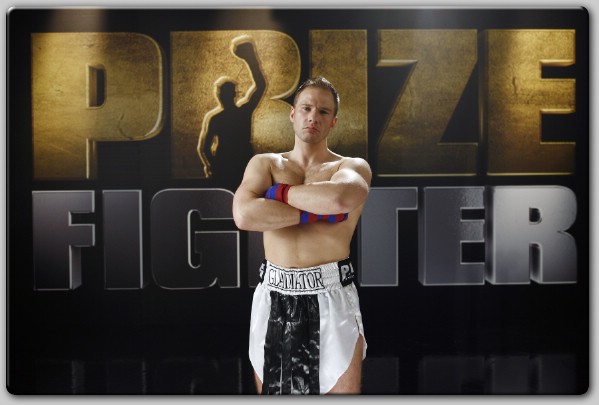
Light Heavyweight in a men’s gladiator skirt.
You might laugh at the latter, but there certainly are a lot of men boxing in skirts–albeit they are called “gladiator” skirts which makes them “male” versus the “female” kind of skirt that doesn’t actually have open slats, except of course, when they do. Hmmm…
Melissa Hernandez v. Jelena Mrdjenovich in Gladiator Skirts! Credit: Rob T Sports Photography/ Rob Trudeau
As for the female “mental” state, back in the 1950s not one, but two of my aunts (one on each side) were sent to mental institutions in their late teens for some version of “hysteria.”
Digging deeper it seems both were hipster gal’s circa 1956 who were enamored with art, smoking reefer and sex with boys (not to mention that one was a teen mom — more later): solution, off to the nut house for shock treatments for their anti-social behavior.
It’s no wonder then that when I was nine and caught site of The Snake Pit on channel 9’s Million Dollar Movie, I was truly terrified. It gave me nightmares for weeks on end, not the least of which was the thought the I could be taken away too if I acted “funny.”
 Watching the fictional Grantham’s in action last night I began to ask myself, are we really so different than the tableau of shock and surprise at Lady Sybil’s sudden death.
Afterall, we live in a world where 700+ women die each day in childbirth. And no, that doesn’t necessarily happen here, but given the decisions that are made with respect to providing prenatal care to poor women, the statistics certainly give us pause.
In the United States the statistics as of 2010 are 12.7 deaths out of every 100,000 births. Among African-American women that statistic jumps to 34.8 deaths per 100,000. In New York City that translates into an appalling statistic: eight African-American women die for every Caucasian woman.
And people wonder why Obama’s Affordable Care Act is so important — get it! Reproductive and prenatal care from contraception to post-natal checkups will actually be covered for all women beginning in 2014.
Throw the problems of the Grantham’s former maid Ethel into the mix (kicked out after getting pregnant by a rich cad, turning to prostitution to keep her son fed, and finally giving him up in order for him to have a better life), including the utter meanness of her peers and we have a picture that can also rival the present. Seen Teen Mom lately?
In sum, not a very pretty picture at nearly 100 years in advance of the Downton Abbey storyline where yes, yes, yes, women in the United States have made extraordinary strides that includes, just last week, the decision to open combat roles to women in the Armed Forces, but as for things like pay equity, reproductive rights, equal protection under the law, violence against women, the medicalizing of women’s “natural” life changes, and the like, we have a long, long way to go.
Dr. Martin Luther King, Jr.

The ultimate weakness of violence
is that it is a descending spiral,
begetting the very thing it seeks to destroy.
Instead of diminishing evil, it multiplies it.
Through violence you may murder the liar,
but you cannot murder the lie, nor establish the truth.
Through violence you murder the hater,
but you do not murder hate.
In fact, violence merely increases hate….
Returning violence for violence multiples violence,
adding deeper darkness to a night already devoid of stars.
Darkness cannot drive out darkness; only light can do that.
Hate cannot drive out hate; only love can do that.
– Dr. Martin Luther King Jr.
Effortless prose on the speed bag …

I’ve always loved the speed bag. Coming at the end of a workout, it feels like a well-earned respite from the grunts and groans of hard hitting on pads, bags and bodies.
One can go slow, fast and everywhere in between as that classic patterned da-da-da-da-da-da-da roams through one’s head, the feet perhaps in syncopated rhythm, perhaps not, as the right and left hands make the speed bag sing.
Once mastered, however, there is always that push towards the next level. In my case I’ve been thinking a lot about elbow strikes and telling myself that it’s good range-of-motion therapy for my shoulder has spurred me on to actually try.
For my first outing I chose a pattern of alternating a four-count between my left and my right hitting slowly with the following pattern: right, right, right, right elbow, left, left, left, left elbow.
I tried it during the last 30 seconds of my third round on the speed bag, and for the fourth round attempted the elbow strike pattern for most of it. I have to say I hit it right on the elbow a few times, but mostly struck the forearm. Still, the range-of-motion was pretty tough on the right side — and as therapy alone, it certainly was something.
Coming home, I thought I’d check out some videos on YouTube and offer a smattering as inspiration!
Speed bag phenom in time to the music!
Cool double-strike patterns with elbow strikes!
Early efforts … with double-strikes.
True mastery.
If I can do it, so can you …

Don’t you just love those words?
Meant as a motivator for the under achieving couch potato that lurks in all of us, it can cut like a rapier.
Still, it can have its place — if the underlying, “you are such a slug” is left out it and the words are more action than anything else, without the accompanying censoring glare!
For the one who says it though, there can also be nothing but the best of intentions. All of us knows of someone who hours out of cancer treatment skips her way to the gym for a good workout and though she may excuse herself for a moment to puke her guts out in the bathroom, she none the less returns to the weight room with a freshly glistening brow, worse for wear perhaps, but no less game.
This brings me to the point.
What if we change that around a bit to an if you can do it, so can I, sensibility. The competitive aside (which motivates in its own way), we are all in this together. Certainly that’s the way it feels at Gleason’s Gym where each and every person sweating and grunting their way through a work out is cheering the hard work of their fellow gym rats.
We also all have our stories; those things that thwart our best intentions and no less tangible than a friend’s cancer, shoulder surgery, ACL tear, too many obligations hitting into limited time or the feeling of inertia that comes when you haven’t hit the gym in a while and need to push yourself out of bed to get there again.
I know for myself, I’ve had all sorts of things that I’ve used to not go to the gym some of which leave me with no choice but to stay home and others of which are more of the mental variety.
Having recently started back on a schedule after recovering from shoulder surgery, I can attest to the myriad of feelings that go into missing the gym and returning. If you’ve been a regular, it’s like missing family, plus that intangible sense of identity that comes of regular practice. During my rehab, I’d find myself going to Gleason’s for an hour on a Saturday, not to box but to do my exercises. Still, it was a bittersweet feeling. I wasn’t boxing, I was stretching and even though I was there, it was hard to feel a part of it.
Ultimately, though, it shouldn’t matter. Any work done is work accomplished, and while it might not be at the peak of the performance you are capable of, you’ve made the effort.
So, while you might go through periods when you are confronted with your decided lack of superhuman capability, give yourself a break and be aware of what being superhuman really means.
If you are say, 58 years old, I can assure you that your hand speed will NEVER match that of an in shape 20-year-old, but when it comes to heart, you might well get to wear your Superwoman T-shirt to the cheers of everyone who sees you!
One of my oldest pals is fond of saying, there are no dress rehearsals ‘cause the only life you have is this one. That might get an argument from some New Agers, Buddhists and Hindus who figure you can cycle through again — for the majority of us though, this is it.
In other words, you really do only have one shot so why not give it your all, whatever that means for you and realize that by following through, your example is making it possible for someone else to say … if you can do it, so can I!
 Girlboxing